More Than a Pamphlet: The Remarkable Rise of America's Pregnancy Resource Centers

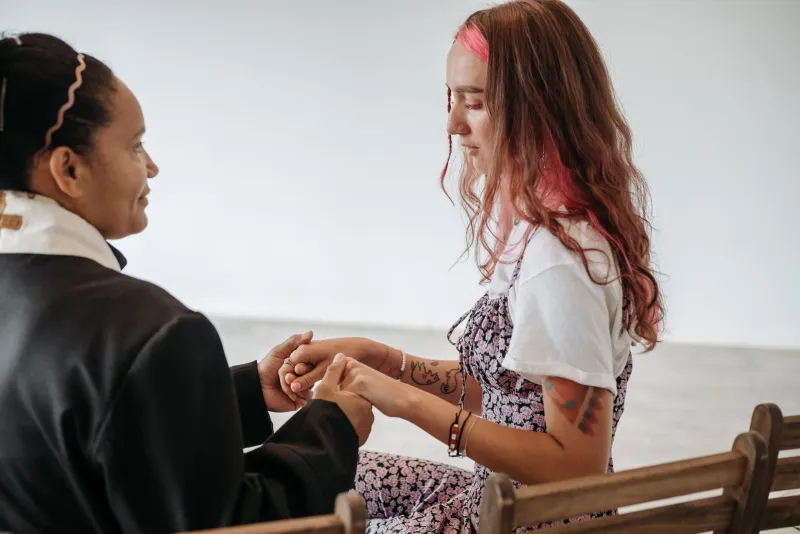
On a Tuesday morning in Columbus, Ohio, a 24-year-old woman named Destiny walked through the door of a local pregnancy resource center with a positive home test, no health insurance, and a boyfriend who had already stopped returning her calls. She expected, at best, a brochure and a referral. What she received instead was a free ultrasound, a nurse practitioner who answered her questions without judgment, a crib and three months' worth of diapers, enrollment in a parenting class, and a mentor who still checks in on her daughter—now eighteen months old—every other week.
Destiny's experience is not exceptional. It is, increasingly, the standard.
America's network of pregnancy resource centers (PRCs) has undergone a transformation so substantial that the institutions many Americans picture—small, underfunded storefronts staffed by well-meaning volunteers handing out pamphlets—bear little resemblance to what these centers have become. Today, more than 3,000 PRCs operate across the country, according to data compiled by Charlotte Lozier Institute, collectively serving over two million clients annually. Their budgets, services, and professional capacity have expanded dramatically, even as they navigate an increasingly hostile regulatory environment designed to limit their reach.
From Counseling Rooms to Community Hubs
The evolution of the modern pregnancy resource center is perhaps best understood through the breadth of services now available under a single roof. While ultrasound services and pregnancy confirmation remain foundational offerings, leading centers have built out clinical programs that include STI testing and treatment, prenatal care coordination, and referrals to OB-GYN partners. Some larger centers, particularly those affiliated with medical networks, have obtained federally qualified health center status, allowing them to bill Medicaid and serve a broader patient population.
Material assistance programs have grown equally sophisticated. Baby boutiques stocked with clothing, formula, car seats, and nursery furniture—often earned through participation in parenting education programs—have replaced the simple donation bins of earlier decades. Centers in urban markets such as Chicago, Dallas, and Atlanta have partnered with food banks, housing assistance nonprofits, and workforce development organizations to address the full constellation of challenges that a crisis pregnancy can expose.
Perhaps most significantly, many PRCs have invested heavily in post-birth mentorship. Programs modeled on the "Earn While You Learn" framework pair new mothers with trained volunteer mentors who provide accountability, encouragement, and practical guidance through the first two years of a child's life. Research from the Caring Network in Illinois suggests that women enrolled in sustained mentorship programs show markedly lower rates of subsequent unintended pregnancy and higher rates of educational and employment advancement than comparable populations without such support.
The Volunteers Who Make It Work
Behind every service offered at a pregnancy resource center is a volunteer—often many of them. The PRC movement is, at its core, a grassroots expression of pro-life conviction translated into direct action. Nationally, it is estimated that PRCs are staffed by more than 67,000 volunteers, contributing labor valued at hundreds of millions of dollars annually. These are not passive supporters; they are nurses, social workers, retired teachers, seminary students, and stay-at-home parents who have decided that believing life is sacred means showing up for it.
Many volunteers describe their service in explicitly vocational terms. "I had my own unplanned pregnancy at nineteen," said one mentor coordinator at a PRC in suburban Nashville. "Someone showed up for me. I'm here because I know what it means when someone doesn't show up, and I know what it means when they do."
Volunteer training has become increasingly rigorous. Organizations such as Heartbeat International and Care Net—two of the largest PRC networks in the country—provide standardized training curricula, credentialing programs, and ongoing professional development for center staff and volunteers. The days of improvised, well-intentioned but inconsistent service delivery are giving way to a professionalized model that can withstand scrutiny and scale with demand.
Facing Down the Opposition
The growth of pregnancy resource centers has not gone uncontested. Abortion advocacy organizations and their allies in state and local government have pursued a sustained campaign to restrict PRC operations through legislation, litigation, and public messaging.
So-called FACT Acts—laws requiring PRCs to post notices directing clients to abortion providers—have been enacted in California, Illinois, and a handful of other jurisdictions, though the U.S. Supreme Court's 2018 ruling in NIFLA v. Becerra struck down California's version as a violation of the First Amendment's free speech protections. That decision established an important precedent, but it has not stopped legislative efforts in other states from continuing to target PRCs with disclosure mandates, zoning restrictions, and licensing requirements designed to impose compliance burdens that smaller centers struggle to absorb.
In the post-Dobbs environment, the targeting of PRCs has intensified. Vandalism and threats against centers spiked in the months following the Supreme Court's ruling, with the FBI eventually opening investigations into coordinated attacks. Far from deterring the movement, the opposition appears to have galvanized it. Donations to PRC networks increased substantially in 2022 and 2023, and several national organizations reported record volunteer recruitment in the same period.
How You Can Help
For pro-life Americans who want to move beyond advocacy and into action, pregnancy resource centers represent the most direct available avenue. The needs are concrete and immediate: financial contributions, donated goods, professional skills, and time.
Locating a center near you is straightforward. Both Heartbeat International (heartbeatinternational.org) and Care Net (care-net.org) maintain searchable directories of affiliated centers organized by zip code. Most centers welcome volunteers with backgrounds in nursing, social work, counseling, education, and administration, as well as those with no specialized training who are simply willing to learn.
For those with the capacity to give financially, PRCs operate almost entirely on private donations and receive no government funding. A contribution to a local center goes directly toward ultrasound equipment, material assistance inventory, staff training, and the operational costs of keeping doors open to women who have nowhere else to turn.
The story of America's pregnancy resource centers is, ultimately, a story about what happens when conviction becomes action—when the belief that every life matters is expressed not only in the voting booth or the public square, but in the quiet, unglamorous, transformative work of showing up for a stranger on a Tuesday morning. That work is expanding, deepening, and changing lives. It deserves the full support of every American who shares it.